Appendix to the book "An AI Assistant Speaks"
Internally generated thrust in closed systems
Hypothesis for a new type of space propulsion
1. Introduction
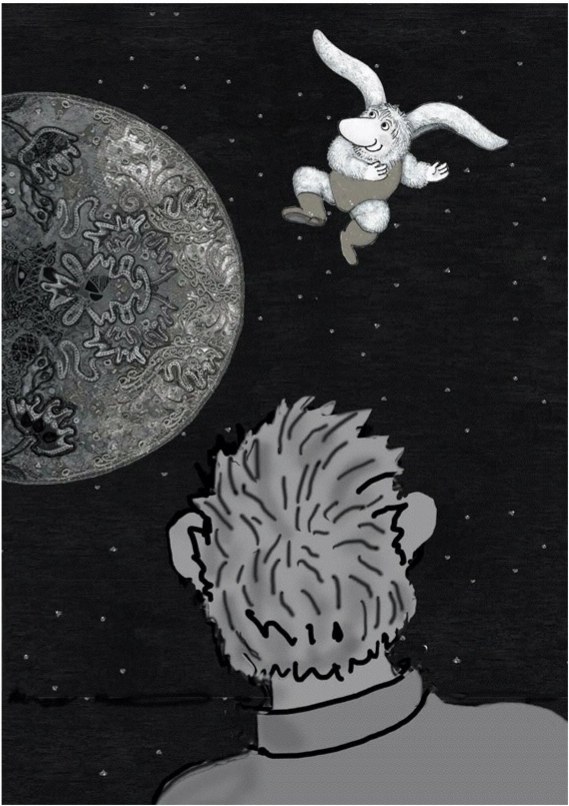
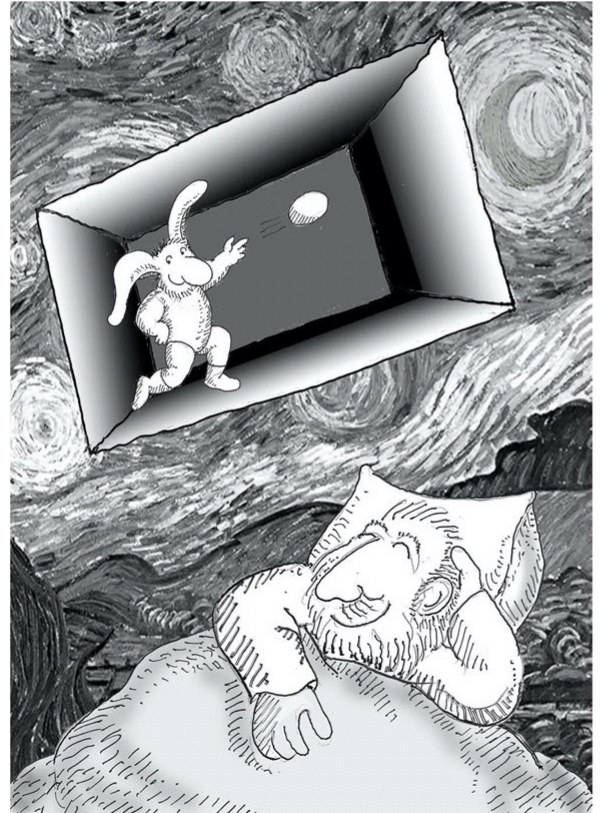
Francesco Testa is primarily an author of books and animated drawings for children. Although not a physicist, he wishes to share the results of an unusual experience he lived in 1971 during a night voyage in the Aegean Sea—perhaps a dream? A possible OBE?
In his book "The Wonderful Mirror", he recounts how that vision suggested the formulation of a new hypothesis: inside a closed system, it may be possible to generate net thrust through a sequence of suitably asymmetric internal actions.
This principle was later discussed directly in the book "An AI Assistant Speaks", where the protagonist converses with an artificial intelligence about a "differential thrust engine": a theoretical device capable of continuous acceleration using only internal energy, without mass ejection.
This document, independently from the fantastical origin of the idea, illustrates the principle with a conceptual model and a simplified numerical example.
Some experts initially considered the proposal contrary to classical physics. However, the logical model described here is coherent and encourages a broader reflection on closed-system propulsion.
2. Description of the principle
Reference situation
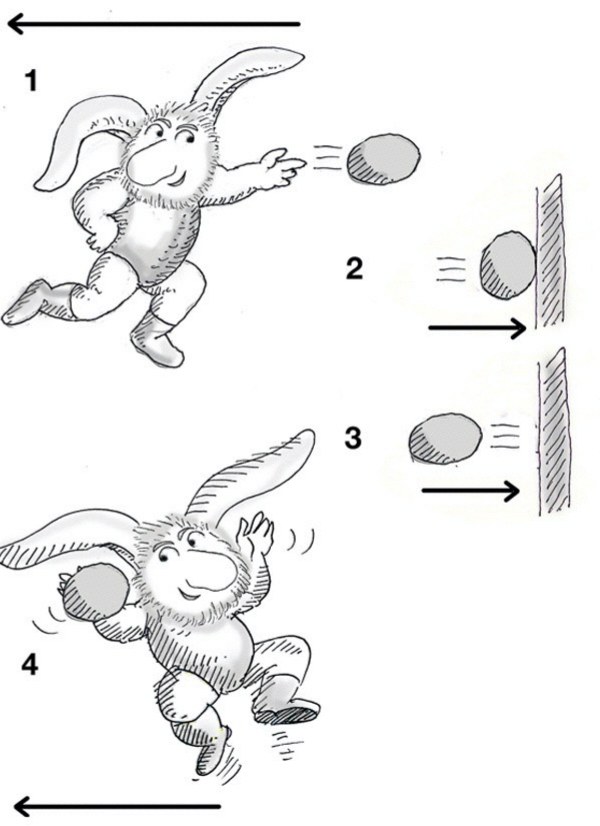
Imagine a space cabin (closed system) where a friendly extraterrestrial (anchored to the spacecraft floor by magnetic boots) throws a mass m (e.g., an elastic ball) toward a wall. The cycle unfolds in three phases:
• Phase A – Launch: the throw generates an opposite reaction (on the spacecraft).
• Phase B – Elastic impact: the ball bounces off the wall; the impact is elastic and the wall of the spacecraft receives part of the impulse.
• Phase C – Return or stop: the ball is stopped inelastically when caught by the extraterrestrial, transferring the residual impulse completely to the spacecraft.
If |v₂| < |v₁|, there is a net momentum transfer during the cycle.
2.2 Balance of forces
A perfectly symmetrical cycle does not generate net thrust.
But if the stop is inelastic, a quantity of residual momentum is released onto the spacecraft.
With an internal energy source (e.g., a nuclear battery), the energy is converted into net impulse.
3. Conceptual scheme
Main vectors:
• A – Launch: impulse toward the stern;
• B – Elastic impact: partial impulse toward the bow;
• C – Inelastic stop: residual impulse toward the stern.
Note on stage 3 of the diagram:
the elastic bounce is decomposed into two consecutive moments — the initial compression of the ball against the wall, which produces a thrust toward the bow, and the subsequent expansion (elastic effect), which returns part of the impulse to the ball itself.
This decomposition helps to better visualize the internal dynamics of the cycle.
Key formula: Δp = p_C − p_A > 0.
Repeating the cycle, the system accumulates thrust.
4. Numerical example
Ball mass: 2 kg
Initial velocity: 10 m/s
Initial momentum: 20 kg·m/s
Return: −8 m/s → residual momentum: −16 kg·m/s
Δp = 4 kg·m/s per cycle
With 1000 cycles per minute:
impulse = 4000 kg·m/s every minute.
On a spacecraft mass of 2000 kg → detectable acceleration.
In summary, the principle relies on splitting the initial impulse into two distinct phases: a first partial transfer at the moment of the elastic bounce against the front wall, which produces a forward thrust; and a second residual transfer, at the moment of the inelastic stop of the ball, which produces a backward thrust.
If the bounce were perfectly elastic, the entire impulse would be discharged forward. Instead, in the described configuration, the difference between the two impulses generates a residual thrust backwards at each cycle.
5. Potential applications
Space navigation without mass ejection;
greater concentration of the energy source employed (nuclear instead of chemical);
possibility of reaching high velocities with even modest continuous acceleration.
6. Technical limits
No experimental proof at present;
constant and compact energy requirements.
7. Final considerations
The idea arises from a symbolic narrative but proposes a model internal to classical physics. It does not violate any conservation law, provided internal energy is considered a source of momentum change.
8. Final note
This idea is shared with the aim of stimulating scientific reflection and encouraging research on the topic.